
READ & LEARN
MDF or particleboard? Ask these 7 questions before buying boards
Choose boards by application, dimensions, finish, installation conditions and technical documents to make a well-supported bulk purchase.
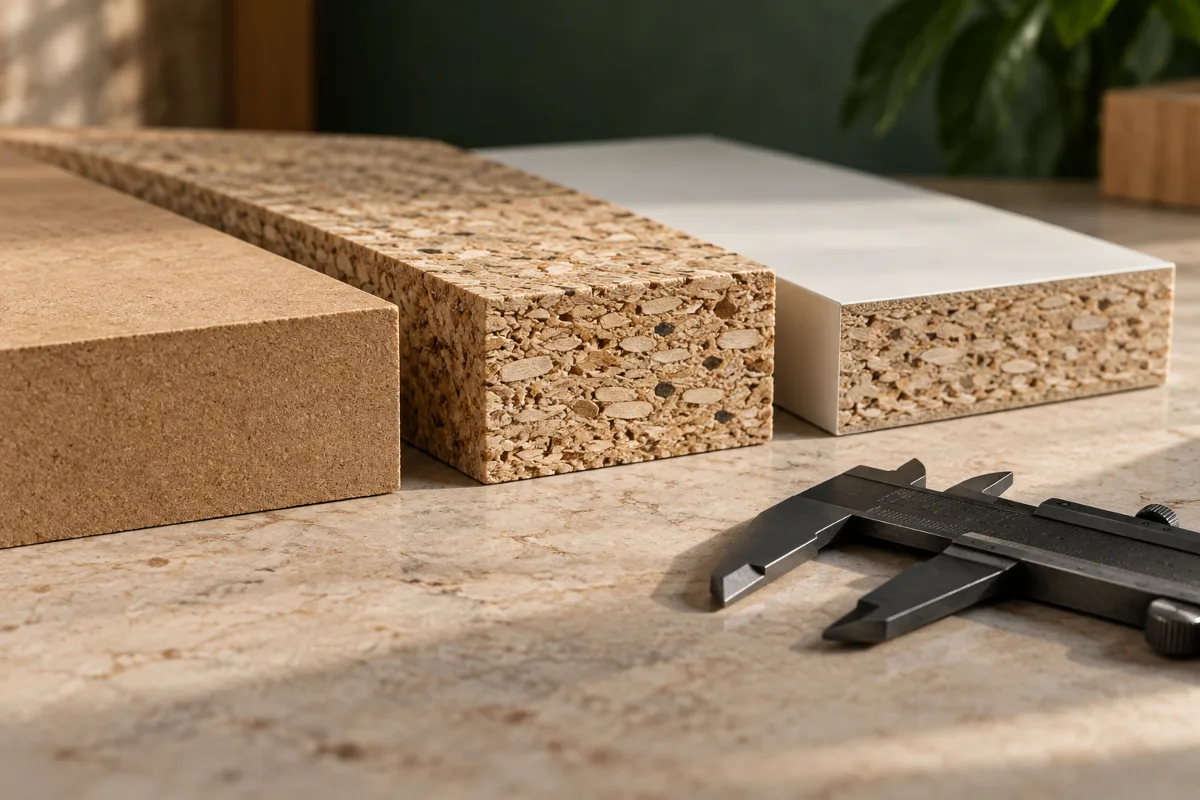
Two boards of the same colour may be made for different applications. A successful purchase starts with writing down the project requirements before requesting prices; otherwise, you may compare the prices of two different products. This guide offers a practical way to talk to suppliers rather than an absolute ranking of materials.
1. Where exactly will the board be used?
“For cabinets” is not enough. Carcasses, doors, shelves, backs and machined components may have different requirements. Specify the installation location, component shape, joints and finish. Review an actual sample with the fabricator for parts that will be machined, and do not decide from photographs alone.
The name MDF or particleboard does not provide a complete technical specification. Ask the supplier for the exact product name and the technical data sheet for that model; avoid applying one model’s specifications to every product from the same brand.
2. Have you stated thickness and dimensions with clear units?
“Large 18 mm board” is ambiguous for a bulk order. Record length, width and thickness separately using the same unit: for example, 2440 mm long, 1220 mm wide and 18 mm thick. For critical components, ask the designer or fabricator to specify acceptable tolerances.
Clarify the selling unit too: is the price per board, per square metre or per pack? Calculate the required quantity from the cutting plan and include project waste as an explicit assumption in the estimate; do not use a fixed percentage for every project.
3. What are the exact facing, colour and decor code?
“White” or “walnut” can refer to several codes and textures. Record the decor code, surface texture, whether one or both sides are faced, facing material and brand in your request. If matching a previous order matters, retain a photograph and sample from that order.
For projects purchased in stages, ask whether supply from the same production batch is possible. Document sample approval so that you can compare the goods received against it at delivery.
4. Is the environment dry, or is moisture exposure possible?
Wood and wood-based products respond to changes in ambient moisture. The EGGER processing guide also stresses choosing a product suited to its environment and protecting it from moisture. Do not treat “moisture resistant” as suitable for every kind of water exposure; check the permitted use in that product’s technical data sheet.
Describe the installation environment and possible water exposure in your request. Agree edge finishing, joint sealing and installation details with the fabricator; selecting the board is only one part of the decision.
5–7. Specify samples, documents and acceptance criteria
- Sample: obtain a representative sample with traceable specifications to approve the surface, colour and machining.
- Documents: review the technical data sheet, manufacturer specifications and any certificates required by the project before ordering. A mark shown in a photograph is not enough on its own.
- Acceptance: list quantity, corner condition, surface appearance, dimensions and accompanying documents in the delivery checklist, and agree how discrepancies will be reported in advance.
A good request for quotation starts with a clear description
Enter thickness, length, width, colour, material and facing type separately in the product features form. Compare only products that meet the project requirements. If you are still deciding between two options, submit a quotation request describing the application and ask the supplier to explain the technical differences of any alternative.
Next, read the guide to comparing quotations and the board delivery checklist. This article’s illustration represents materials conceptually and does not replace a sample or technical document for a specific product.
Sources and further reading
Official EGGER processing guide for faced boards
Comments (0)
Comments appear after review. Share relevant product or project experience, and keep your message respectful.
No published comments yet. Share your experience or question.
Sign in to leave a comment